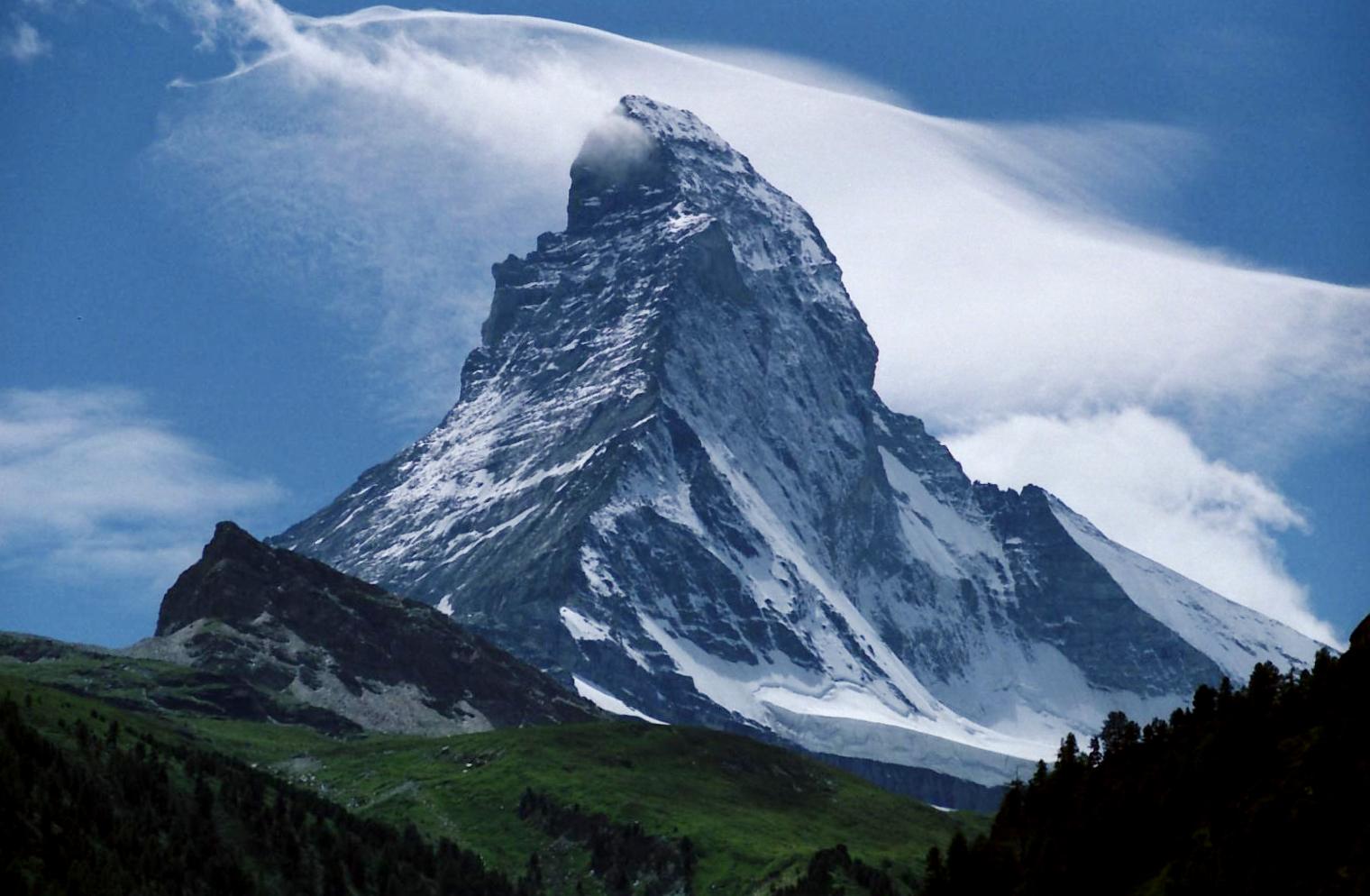

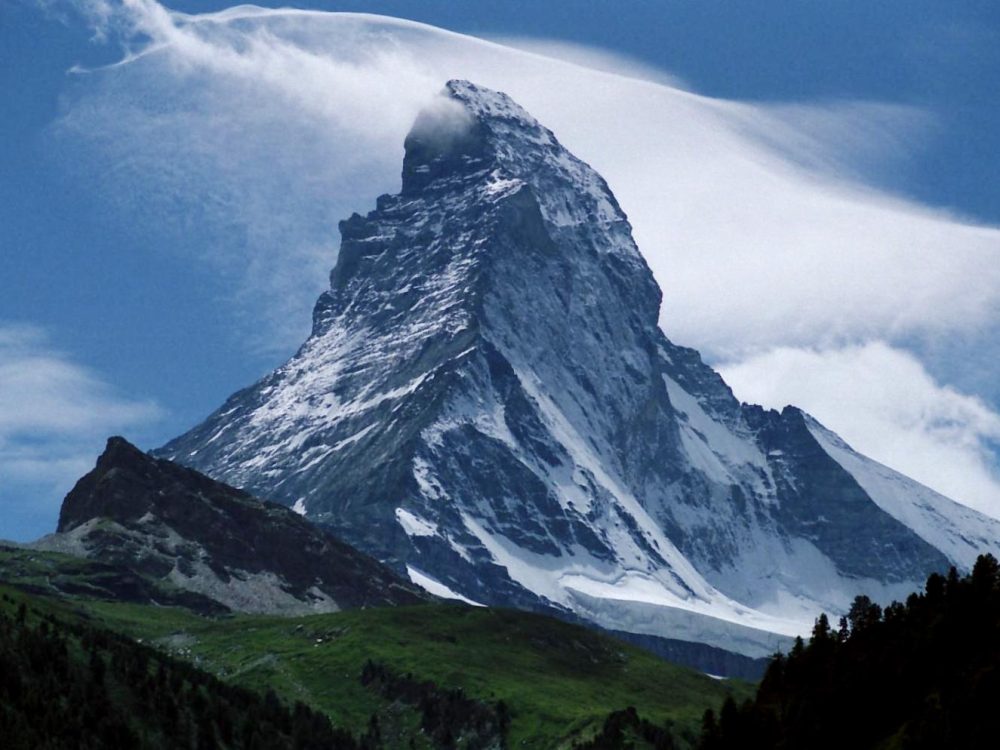
Zermatt has no combustion engines in it. Horse-drawn carriages and small electric shuttles move over the cobbles without making a sound. Look up, and 4,478 metres of Matterhorn stands over a valley that smells of cut larch and woodsmoke.
One · A hundred years up the cogwheel
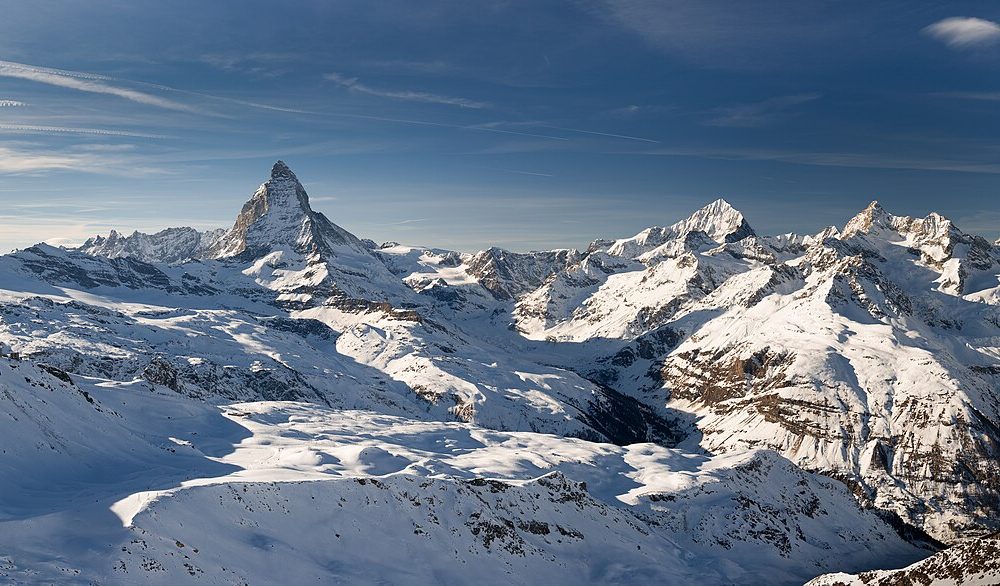
The Gornergrat Bahn opened in 1898, the first fully electrified rack railway in the Alps. The small red train climbs through pine and over snowfields, and with every hundred metres of altitude the Matterhorn shows you a different edge of itself through the window.
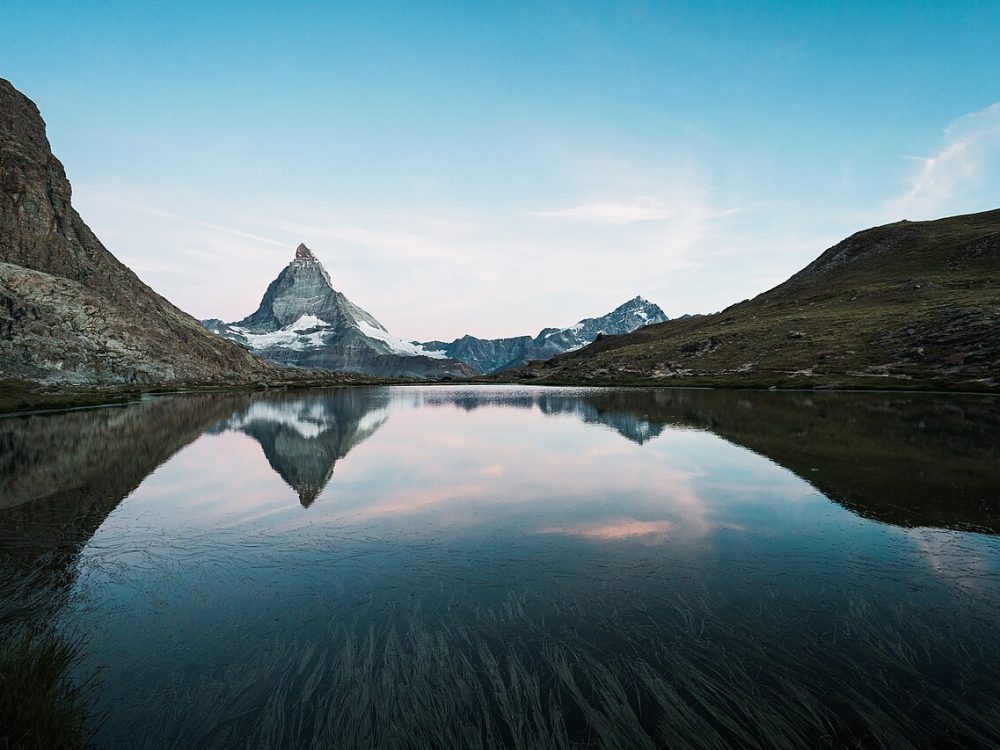
Get off at Rotenboden, 2,815 metres, and it is ten minutes on foot to Riffelsee. On a still morning the surface holds the mountain exactly — the frame every photographer who comes up here is hoping for.
“In front of an alpine summit people slow down without being asked, and start measuring their lives against rock and weather instead.”
Two · A fire, a fondue, and a balcony facing the mountain
Back down to The Omnia, cut into the hillside above the village. Ali Tayar designed it, and it manages something difficult: American modernism sitting comfortably inside Swiss larch framing.
Slide the balcony doors open and the private outdoor pool faces the mountain head-on. Getting into 40°C water in a 0°C dusk, holding a glass of dry Valais white while the snow turns a soft violet — that is the entire argument for the place.
Luxury benchmark
From the take (3)
Sophie Van Der Berg
August 13, 2026 1:19 pm
Wonderful editorial layout! The EXIF data cards and the before/after comparisons make this feel like a true National Geographic magazine on WordPress.
Gu Qingchuan (travel photographer)
August 14, 2026 1:19 pm
The light in the ice-cave set is extraordinary — especially the warm-to-cool separation at 14mm and f/2.8. Is the Crystal Cave better first thing in the morning, or around midday?